HAMAMATSU HC133-01 Pmt
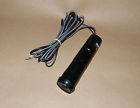
( Brand: Hamamatsu )
Review HAMAMATSU Pmt
The HC133-01 Photomultiplier Tube (PMT) from Hamamatsu is a high-performance device designed for use in various scientific applications, particularly in the field of photon detection. This PMT features a 13 mm diameter photocathode, which provides a large active area, thereby increasing its sensitivity to incoming photons.
The HC133-01 PMT is equipped with a bialkali photocathode, which has a peak quantum efficiency of about 25% at a wavelength of 420 nm. This makes it an excellent choice for applications that require detection of ultraviolet (UV) and visible light. The photocathode is protected by a 6 mm diameter quartz window, offering a high transparency in the UV region.
The PMT features a multi-stage dynode system, which amplifies the photoelectric signal produced by the photocathode. This system consists of 9 dynodes, each with a positive potential to induce secondary electron emission. The result is a significant amplification of the initial signal, allowing for easy detection and analysis.
The HC133-01 PMT is designed for operation in a wide voltage range, from 500 to 2000 V. This flexibility allows it to be used in a variety of experimental setups, each with different requirements for signal amplification. The tube is also equipped with a built-in base, which simplifies its integration into various systems.
In terms of performance, the HC133-01 PMT has a dark count rate of less than 100 Hz at -40 C, ensuring a low background noise level. Its gain is about 10 6, providing a high signal-to-noise ratio. The PMT also has a fast rise time of about 1 ns, making it suitable for applications that require fast response times.
In conclusion, the HC133-01 Photomultiplier Tube from Hamamatsu is a versatile and high-performance device for photon detection. Its large active area, high quantum efficiency, and multi-stage dynode system make it an excellent choice for a wide range of scientific applications. Its low noise level, fast response time, and wide voltage range further enhance its performance and versatility.
The Hamamatsu HC133-01 Photomultiplier Tube (PMT) is a widely used device in various scientific applications due to its high performance and reliability. Let's examine its pros and cons:
Pros:1. Sensitivity: The HC133-01 PMT is highly sensitive, with a photon detection efficiency of up to 32% at 420 nm. This makes it an excellent choice for low-light applications.
2. High Dynamic Range: This PMT has a wide dynamic range, which is essential for detecting signals with a large amplitude difference.
3. Fast Response Time: The HC133-01 PMT has a fast response time, typically around 1.5 ns, which is beneficial in applications requiring quick signal detection.
4. Robustness: Hamamatsu PMTs are known for their robustness and long-term reliability, making them a popular choice in research environments.
Cons:1. Cost: The Hamamatsu HC133-01 PMT is relatively expensive compared to other PMTs on the market.
2. Size and Weight: The PMT is quite large and heavy, which can be a disadvantage in portable or space-constrained applications.
3. Requires Special Handling and Cooling: The HC133-01 PMT requires proper handling and cooling to maintain its performance. This can add to the overall cost and complexity of the system.
In conclusion, while the Hamamatsu HC133-01 PMT has several disadvantages, such as its high cost and size, its superior performance in terms of sensitivity, dynamic range, and fast response time make it an excellent choice for applications requiring high-performance photon detection. If the cost and size are not major concerns, the HC133-01 PMT is highly recommended. However, if cost and size are critical factors, other PMTs with similar performance but lower cost and size may be more suitable alternatives.
part #: hc133-01 prices
- $99.99-$149.99
General:
- Business & Industrial > Healthcare, Lab & Life Science > Lab Equipment > Lab Lasers & Photonics
- condition: New other see details
- in stock: Yes
Shipping:
- cost: $6.1
- handling: 2 days
- type: Calculated
Seller:
- zipcode: 92026
- city: Escondido, California
Ratings:
- Quick shipment; Great Product 01-21-15
- Good Seller 01-24-15
- Superb item and service. Many thanks from the UK A++++ 01-23-15
- Superb item and service. Many thanks from the UK A++++ 01-22-15
- Alles Bestens, gerne wieder 01-23-15
Offer:
- quantity: 1
- Started: January 26, 2015, 3:58 am
- # Sold: 0
- best offer: true
- # bids: 0
Payments:
- PayPal
Returns:
- policy: no returns
Hamamatsu HC133-01 Is Similar To:
- 6703-0013 Hamamatsu Pmt Detector Assembly Hc120-43 (36.1% similar) Testing performed: none. Hamamatsu pmt detector assembly HC120 listing details condition: used, removed from a working environment. All equipment is used, unless indicated otherwise above...(February 13th, 2017)
- R6925 952870-01 Hamamatsu Pmt Socket C6270 Traco Power Supply Amplifier Circuit Board (24.3% similar) An optical filter can be inserted between the pmt and the fiber. Hamamatsu pmt R6925 socket C6270 Traci power supply amplifier circuit board it also includes an optical fiber connecting a focal lens in one end and a shutter in another. Very good condition. Taken out from a sealed working environment...(June 1st, 2016)
- Automated R928 Hamamatsu C6270 Lot G113922 2 Assemblies Pmt (39.5% similar) No other accessories are included. If you do not see it in the photos, it is not included. One unit has two filter wheels although the other unit does not have any filter wheels. This sale does not include any cables or cords whatsoever. All offered products are sold as advertised, as is and without...(February 6th, 2015)
- Hc120-39 Genechip Affymetrix Scanner Color Filter Wheel Hamamatsu Pmt Detector (26% similar) Used condition aviatrix gene chip scanner color filter wheel Hamamatsu pmt detector HC120 39 isometrics gene chip scanner 3000 motorized color filter wheel assembly with mirror lens optic mount, Hamamatsu pmt detector hc photo sensor and mounting assembly free domestic shipping Inc 2O20011 8/1 6...(October 19th, 2016)
- H7155 Hamamatsu Pmt (63.4% similar) Used 1/2 times...(January 22nd, 2015)
- H9305-203 Hamamatsu Lot Compact Side-on Pmt Square Photosensor Module Assembly (32% similar) Info the shipping price is only for us 48 contiguous states...(October 28th, 2016)
- H957-05 Hamamatsu Pmt Photomultiplier Tube Housing Lincoln Laser Clock Preamp (26.3% similar) It's often to late to solve them if you wait. Elector Marvin is a 9/5 Mon Fri business. Problems are questions that were not asked before the offer closed. Item condition used this item is untested. Hamamatsu H957 05 pmt photo multiplier tube, housing, Lincoln laser clock preamps a Hamamatsu model ...(October 11th, 2016)
- Hc123-06 9781b Power Base Regulated Hamamatsu Electron Tube Photomultiplier Pmt Hv Fuse K3 (26.8% similar) Follow the link for photo multiplier tube product page. Spectrum can be selected for high Cr working used. Discount spectrum pmt max. Warranty electron tubes photo multiplier tube with Hamamatsu HIV power base regulated output fuse free shipping pmt type 9781B 29 pmt serial pmt window material ...(December 3rd, 2015)
- R331-08 Hamamatsu Photomultiplier Lot Of 2 Pmt With Interface (33.7% similar) Review the pictures for included elements and condition of the item. These were taken from a machine that is no longer being used. To make sure you are getting an accurate quote via the shipping calculator, make sure your zip code is the default zip code when calculating the shipping cost for this ...(January 17th, 2016)
- R6233-04 Pmt Photomultiplier Tube Hamamatsu (27.7% similar) Free shipping in the continental us. This is used and in good condition. Hamamatsu R6233 04 pmt photo multiplier tube...(November 14th, 2015)
- Hc-124-04 Hamamatsu Hc124-04 Pmt Detector (60.3% similar) This item was pulled from a working environment and is in good condition overall, with some scuffs scratches use. This item will have a non DOA warranty only. No other item or accessories are included. I have no means to power it on test. One Hamamatsu hc pmt detector assembly...(June 7th, 2017)