SIGMA BCA-1CURRENTLY Protein Assay Quantitation Bca
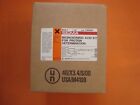
( Brand: Sigma ), ( Manufacturer Part Number: BCA-1CURRENTLY ), ( Intended Use Discipline: Biological Laboratory )
Review SIGMA Protein Assay Quantitation Bca1 New Unopened
The BCA Protein Assay Quantitation Kit, Sigma BCA1, is a versatile and highly sensitive tool for the quantitative determination of total protein in various biological samples. This kit utilizes the biuret reaction, where the copper (II) ions in the reagent form a complex with the peptide bonds in the protein, resulting in a color change that can be quantified spectrophotometrically.
The BCA1 kit includes all the necessary reagents, including bicinchoninic acid (BCA), copper (II) sulfate, and sodium tartrate, as well as a detailed protocol for accurate and reproducible results. The assay is suitable for a wide range of protein concentrations, from low micromolar to millimolar, making it ideal for use with various biological samples such as cell lysates, serum, plasma, and culture medium.
The BCA Protein Assay Kit has several advantages over other protein quantification methods. It is highly sensitive, with a detection limit of 0.05-0.2 mg/mL, depending on the sample type and the assay conditions. It is also simple to perform, requiring just a few minutes of incubation and minimal sample preparation. Additionally, the assay is non-discriminatory, meaning it can quantify all types of proteins, including denatured and modified proteins.
The BCA Protein Assay Kit, Sigma BCA1, is a valuable tool for researchers in various fields such as biochemistry, molecular biology, and cell biology. Its high sensitivity, versatility, and ease of use make it an indispensable tool for protein quantification in both basic and applied research.
Pros of buying BCA Protein Assay Quantitation (Sigma BCA1):1. High Sensitivity: Sigma BCA1 is highly sensitive, making it ideal for detecting low concentrations of proteins in samples.
2. Wide Detection Range: It has a wide detection range, which means it can accurately measure high and low protein concentrations.
3. Easy to Use: The BCA1 protein assay is simple and easy to use, requiring minimal preparation and no special equipment.
4. Reliable: Sigma BCA1 is a reliable and reproducible method for protein quantitation, with consistent results across multiple experiments.
Cons of buying BCA Protein Assay Quantitation (Sigma BCA1):1. Requires Heat Denaturation: The BCA1 assay requires heat denaturation of the protein samples, which can potentially affect the integrity of some proteins.
2. Sensitivity to Interfering Compounds: The BCA1 assay can be affected by the presence of certain interfering compounds in the sample, such as reducing agents.
3. Limited Specificity: While the BCA1 assay is generally specific for proteins, it may not be ideal for quantifying specific types of proteins, such as membrane proteins or highly glycosylated proteins.
Conclusion:Sigma BCA1 is a highly sensitive and reliable protein quantitation method with a wide detection range. It is simple and easy to use, making it a popular choice for many researchers. However, it requires heat denaturation of the protein samples and can be affected by interfering compounds. If specificity for certain types of proteins is required, alternative methods may be more suitable. Overall, the BCA1 assay is a good choice for quantifying proteins in a variety of samples, and its ease of use and reliability make it a worthwhile investment for many research labs.
Recommendation:If you are looking for a reliable and easy-to-use protein quantitation method, I would recommend the BCA Protein Assay Quantitation (Sigma BCA1). It is a versatile tool that can be used in a variety of research applications, and its wide detection range and high sensitivity make it a valuable asset in any laboratory. However, it is important to carefully consider the potential limitations of the assay, such as its sensitivity to interfering compounds, and to consider alternative methods if specificity for certain types of proteins is required. Overall, the BCA1 assay is a great choice for many research labs, and I would recommend giving it a try.
Details:
For quantitation of protein. Must be refrigerated on arrival.
specifications lablaserphotonicszo:
- brand: Sigma
- mpn: Bca-1currently
- intended use discipline: Biological Laboratory
Rating:
- # feedbacks: 1405
- rating: 100.0%
General lablaserphotonicszo.com:
- condition: New
- in stock: Yes
- Business Industrial > Healthcare, Lab Dental > Medical Lab Equipment, Devices > Lab Lasers > Diode Lasers
Payments lablaserphotonicszo.com:
- Credit Card
- Wallet
Returns lablaserphotonicszo.com:
- policy: no returns
Offer lablaserphotonicszo.com:
- sold: 0
- Started: June 13, 2022, 2:02 pm
- best offers: no
- quantity: 1
- options: Ship-to-home
Shipping lablaserphotonicszo.com:
- carrier: USPS
- type: CALCULATED
- type: Economy Shipping
- cost: $12.46